

The thyroid is a butterfly-shaped gland located at the base of the neck, consisting of two lobes that sit on either side of the trachea. It releases hormones necessary for many of the body’s vital functions, including metabolism, heart rate, body temperature and growth and development. However, when the thyroid does not function as it should, or when structural changes develop, it can begin to affect your overall well-being.
In some cases, conditions affecting the thyroid require surgical treatment. These may include benign nodules, goitres or more complex conditions such as hyperthyroidism or thyroid cancer. Surgery is recommended when it is necessary to remove abnormal tissue, ease symptoms or prevent further complications, with the aim of helping you return to a better quality of life.
If you are navigating a thyroid condition, having a clear and thorough assessment can make all the difference. We provide comprehensive care that supports you from diagnosis through to treatment.
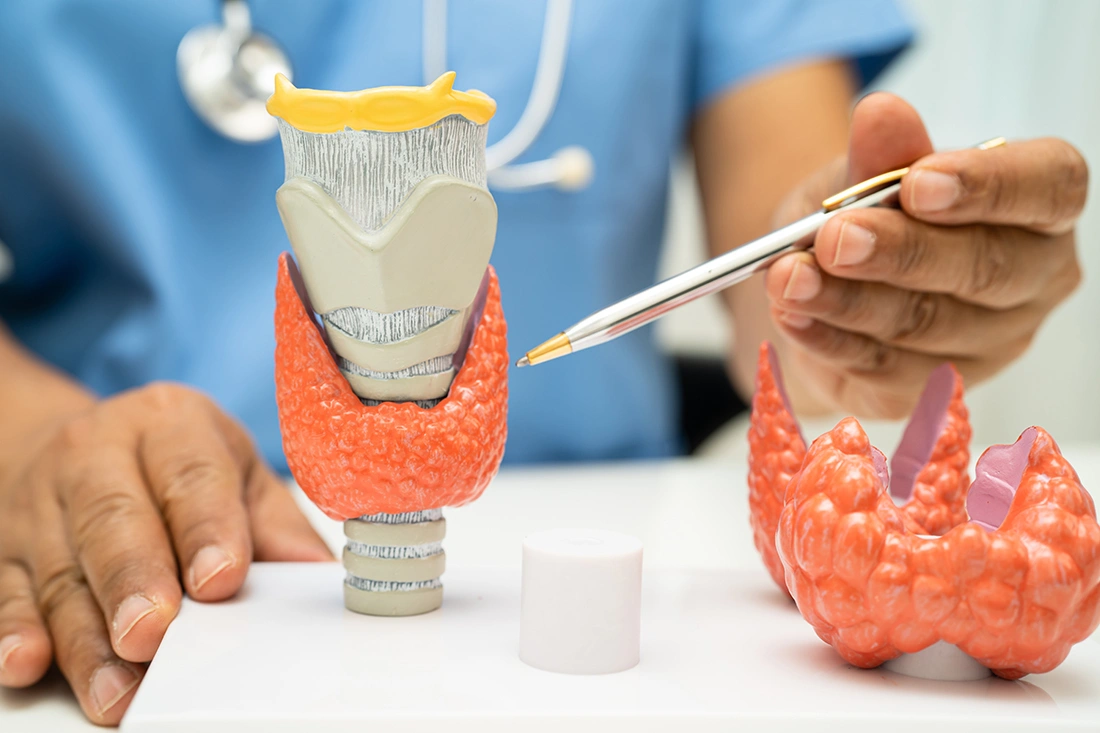
The type of surgery recommended will depend on your diagnosis, the size of the thyroid nodule or goitre and whether there are concerns about cancer. The following are the most common surgical approaches:
This procedure removes one side of the thyroid gland. It is commonly advised when a nodule or tumour is confined to a single lobe. In many cases, the remaining lobe is able to produce enough hormones for normal body function.
This surgery involves removing the entire thyroid gland. It is typically recommended for thyroid cancer, large goitres that affect breathing or swallowing, or hyperthyroidism such as Graves’ disease that does not respond to other treatments. After this procedure, lifelong thyroid hormone replacement is required.
If you have previously had part of your thyroid removed and further testing shows cancer, a second surgery may be needed. This procedure removes the remaining thyroid tissue to ensure complete treatment.
When thyroid cancer has spread to nearby lymph nodes, this procedure may be performed alongside thyroid surgery. It involves removing affected lymph nodes to reduce the risk of recurrence and better control the condition.
After thyroid surgery, most patients stay in the hospital for about two to three days for monitoring. Once discharged, recovery typically takes one to two weeks. During this time, it is important to avoid strenuous activities and allow your body to heal.
In the first few days, some temporary side effects are common. These may include mild pain at the incision site, a hoarse or weak voice, and swelling in the neck. These symptoms usually improve as the body heals and inflammation subsides. For long-term management, patients who undergo a total thyroidectomy will need daily thyroid hormone replacement therapy to maintain proper hormonal balance. With appropriate follow-up care, most people can return to their usual routines without significant disruption.
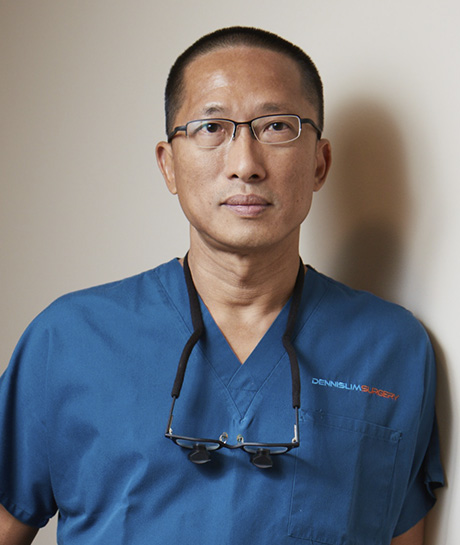
When it comes to your care, the right expertise makes a difference. Here is what you can expect with treatment from Dr Dennis Lim:
Not necessarily. Many thyroid nodules are benign and can be safely monitored over time. A proper evaluation, which may include ultrasound and biopsy, is needed before deciding on treatment. Surgery is usually considered if the nodule is cancerous, suspicious or causing symptoms such as difficulty swallowing or breathing.
While many surgeons perform thyroid procedures, those with dedicated training in head and neck surgery and extensive experience tend to achieve more consistent outcomes. An experienced surgeon is also better positioned to preserve your voice and protect nearby structures such as the parathyroid glands.
The procedure typically takes two to three hours. You can expect a hospital stay of two to three nights. If you are travelling from overseas, it is advisable to plan for about a week in Singapore to allow time for a post-operative review. Most patients are able to return to light daily activities soon after discharge.
No, this depends on the type of surgery performed. If only part of the thyroid is removed and the remaining portion functions well, hormone replacement may not be necessary.
When properly prescribed, thyroxine does not cause weight gain, hair loss or fertility issues. Side effects are uncommon and usually occur only if the dosage requires adjustment.
Surgery is recommended when thyroid cancer is confirmed or strongly suspected. It may also be advised for large goitres that affect breathing or swallowing, or for hyperthyroidism that does not improve with medication.
Costs vary depending on the type of surgery, the complexity of your condition and whether cancer treatment is required. Insurance coverage will also influence your out-of-pocket expenses. A detailed cost breakdown will be provided during your consultation so you can make an informed decision.

Need clarity and guidance for cancer care?
Please reach out to us.


